

Yr Wyddfa (Snowdon)
Pronunciation - “Uhr With-va"
Height - 1085m (3560ft)
Rhita Gawr, the ruler of Wales, was known as the fiercest giant. He conquered 30 rulers of Britain and crafted a cloak using their beards. King Arthur declined to shave his beard and dared Rhita Gawr to a fight.
Following a intense fight, Arthur and Rhita both sustained injuries. Arthur's warriors stacked stones on top of Rhita's corpse to construct a burial site, named "Gwyddfa Rhita" ("Rhita's Tomb"). As time passed, the name transformed to "Yr Wyddfa".
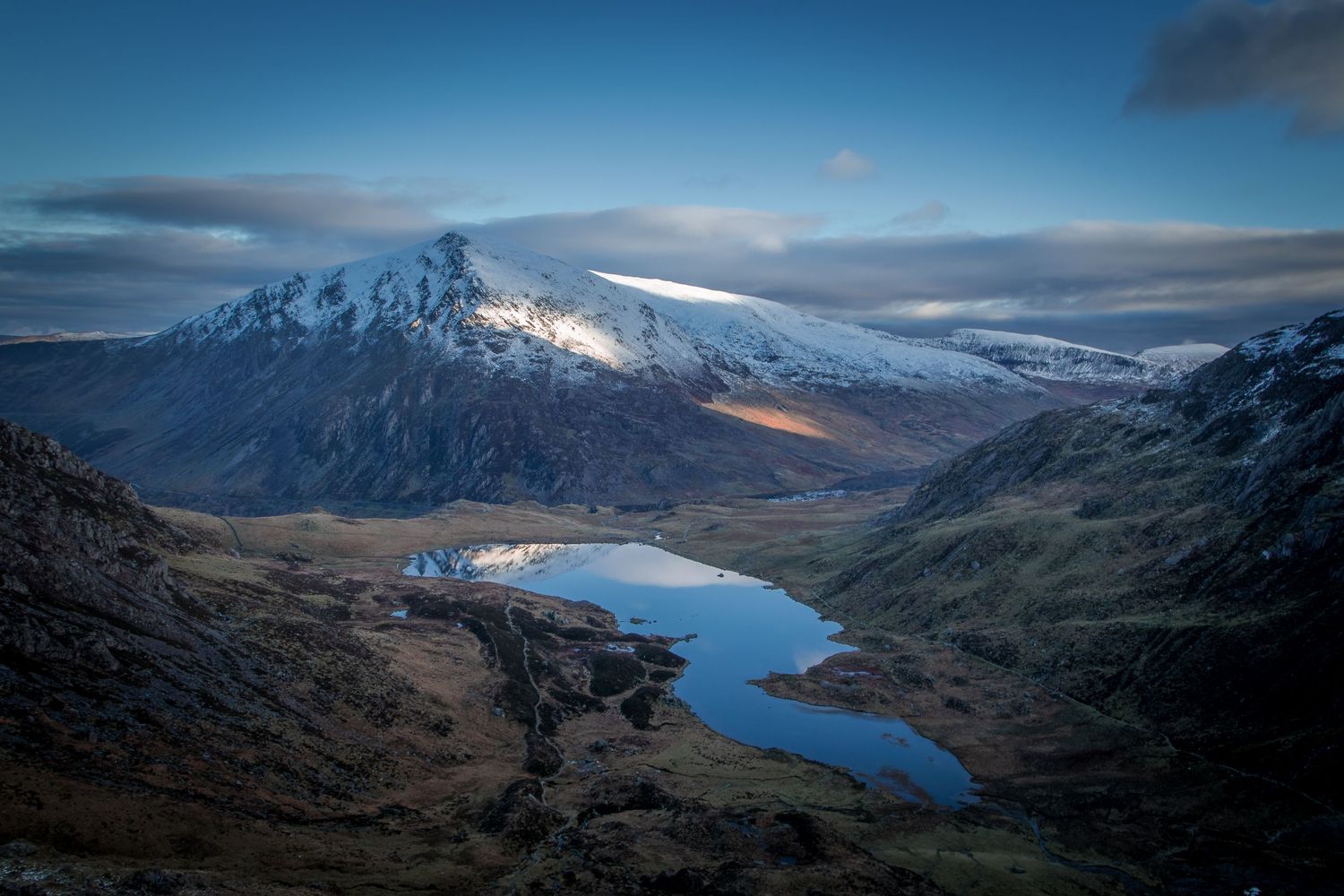
Cwm Idwal
Pronunciation - “Koom Id wuhl"
Location - Dyffryn Ogwen
The young man who tragically died is the namesake of the lake. Legend says Idwal was the son of Owain Gwynedd, a prince from the 12th century. Idwal, despite being handsome and well-educated, lacked the skills of a fighter and was sent to live in peace with his uncle Nefydd during his father's time at war.
Nefydd was envious and his son Rhun was dull, unlike Idwal who was clever and bright. Consumed by animosity, Nefydd decided to take the boys for a stroll near the lake, where he cruelly shoved Idwal in and mocked him as he struggled to stay afloat. Owain was heartbroken and expelled Nefydd from his territories. After that, he decided to call the lake by his son's name.

Tryfan
Pronunciation - “Truh van"
Height - 918m (3010ft)
Tryfan, derived from Tri Faen, translates to "three rocks" in Welsh. This relates to the trio of rocky summits that are visible from certain perspectives.
Tryfan has always been a favored spot for rock climbers and mountain enthusiasts. In 1907, George Mallory had his first two ascents of British rock on Tryfan. Sir Edmund Hillary also prepared on Tryfan before his ascent of Everest in 1953.